Shikoku Henro: Reflections
Reflections, suggestions, and resources for completing the Henro
This post is the second in a two part series about my experience on the Shikoku Henro in Japan in the spring of 2018. The first post covered stats, a daily summary, and photos over the 26 days of walking and cycling. This second post covers some personal reflections, suggestions, and resources for people planning to do the Henro.
Reflections
With every big adventure, I try to internalize the experience afterwards and capture some personal reflections. While there were similar reflections with prior adventures, the Henro was somewhat different for me. I feel that I grew and learned a lot during that time and in ways different than I expected. Below are some of my final reflections from the journey.
Cycling vs. Walking
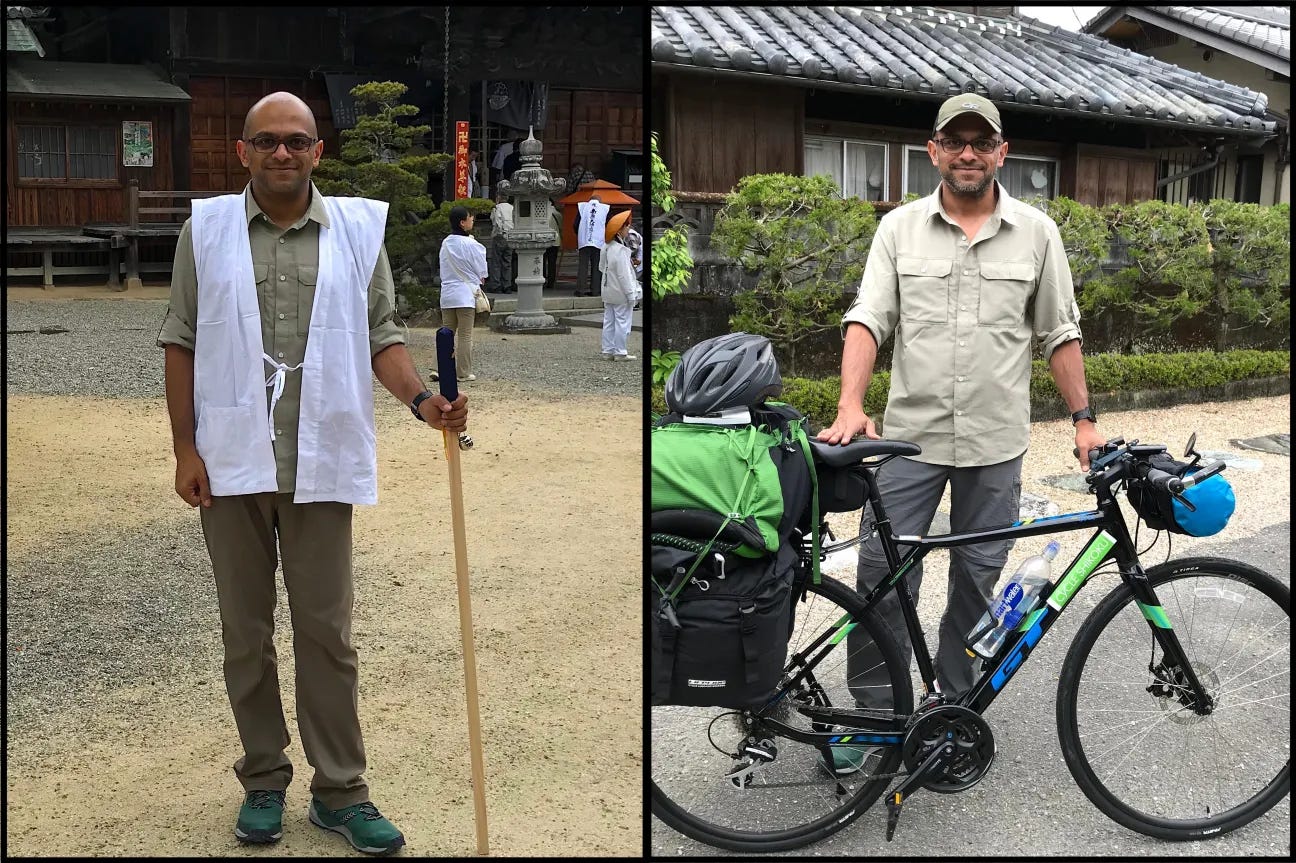
I walked the first week of the Henro and then rented a bicycle for the rest. Overall, I am pleased that I got to experience the Henro both as a walking and cycling pilgrim, but the two experiences were very different.
After walking for the first week and to the first 22 temples, the route headed south along Kochi coastline and the distances between temples was much longer and almost entirely on pavement along roads. It was a perfect time to start cycling. I love cycling along coastlines as I did on my Pacific Coast bike tour.
As soon as I started cycling, the experience felt less like a pilgrimage and more like a bike tour. There was less time to clear my head or contemplate, as I was constantly focused on the road, cars, directions, etc. Further, since I was cycling 2-3 days worth of walking each day, I would rarely meet the same henros more than once, so I was not able to build a consistent pilgrim community.
The change in experience was worthwhile for me and I was happy with the decision. The only change I would make in hindsight would be to bring my own bike and gear instead of renting. Regardless of the quality of rental gear, having your own bike/gear that is tuned perfectly to your needs and preferences would have led to a smoother experience. I’m certain that my next international bike tour will be with my own gear.
Shikoku Henro vs. Camino de Santiago
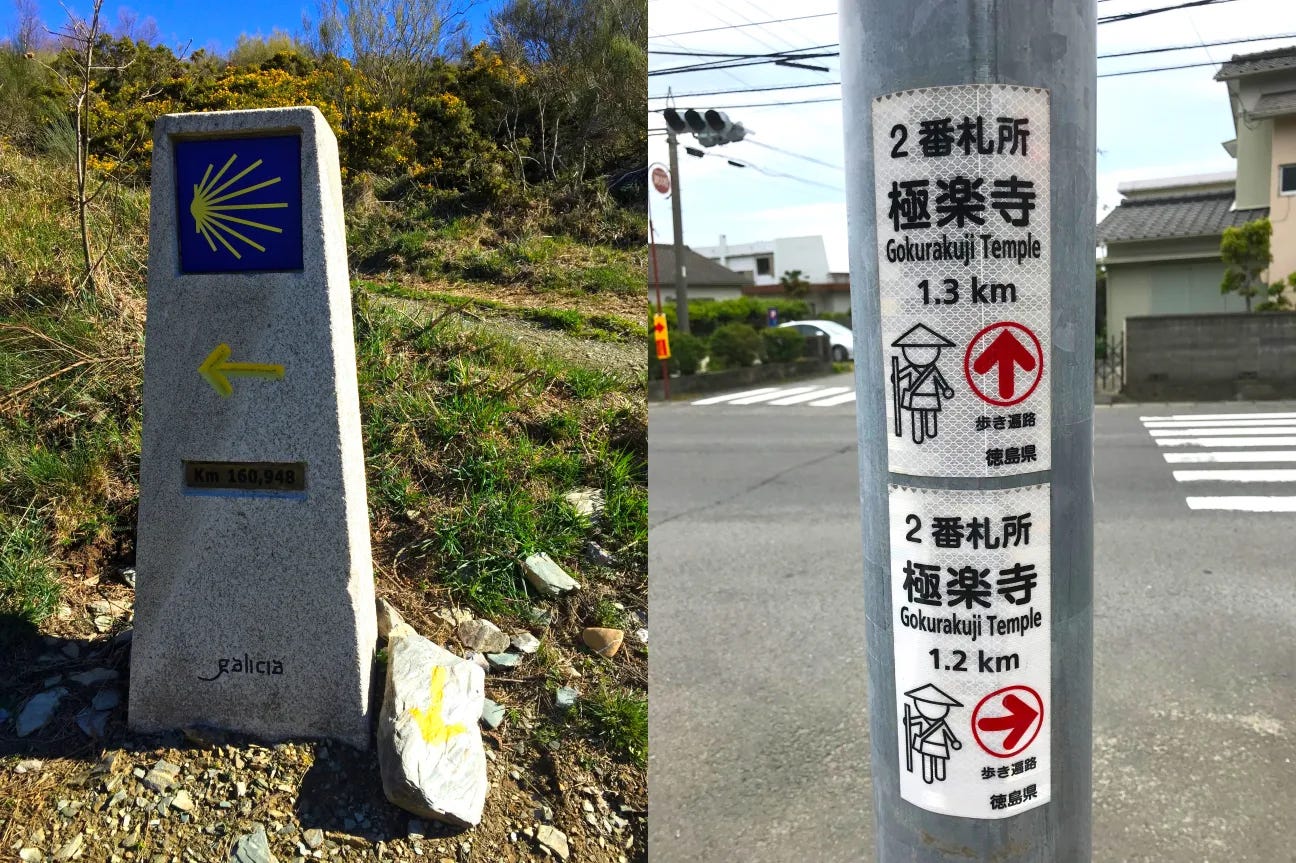
Many foreign henros, including myself, had previously completed the Camino de Santiago in Spain. While there are similarities in the two experiences, there were big differences. The Henro is much less social than the Camino (especially on the Camino Frances route). The Henro provided more opportunity to reach inward and experience a solo journey with moments of community, whereas on the Camino the community was a primary part of the experience.
There were opportunities to build community on the Henro (especially when walking), but it is more reserved and subdued than on the Camino. There were fewer foreign pilgrims and language certainly played a part in building community with local Japanese henros and Shikoku locals along the way. However, I was able to get a glimpse of Japanese life and customs, from onsens/public baths, guesthouse customs (e.g. outdoor vs. indoor vs. toilet slippers), food, manner of communication and courtesies, etc. What a marvelous and unique culture!
Japanese Community
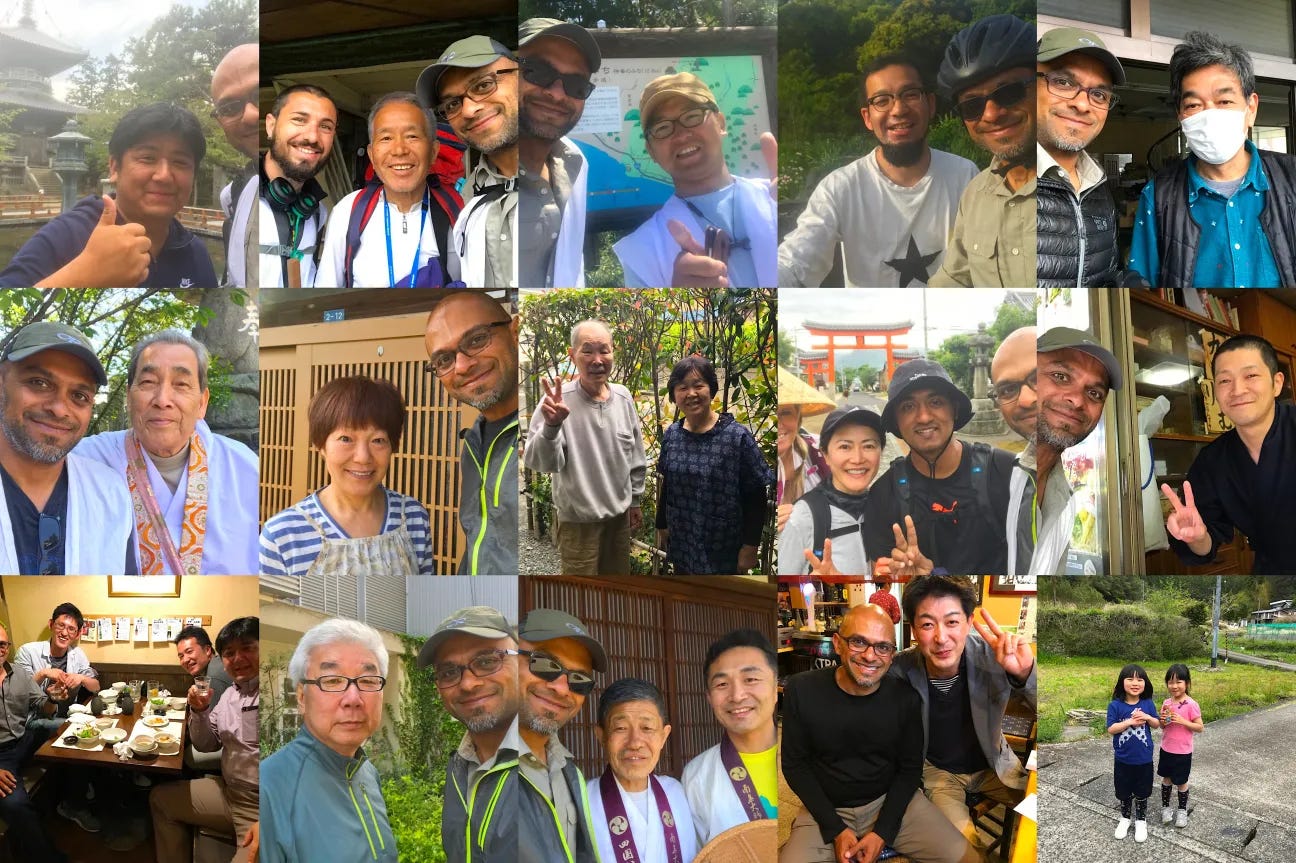
Some of the highlights on the Henro included the scenery, the physical challenge, and the foreign henros I met from 19 countries. However, the biggest highlight was the Japanese people I met along the way, both Japanese henros and Skikoku locals, that made the experience truly memorable.
The Japanese henros were pillars of strength, determination, and focus. They were usually much older than me, some into their 70s, with amazing vitality and strength. It gave me a goal of reaching my senior years while still being able to live such an active and healthy life.
The locals of Shikoku were absolutely wonderful. They really appreciate and look after the henros. They showed such generosity, kindness, and curiosity throughout my journey. While cycling, the drivers showed no aggression and were very patient when they couldn’t pass. I received countless ossettai (gifts) along the way. Knowing a little Japanese really helped in connecting with people, as they really appreciate when foreigners make an effort to communicate in Japanese.
On almost every adventure I have been on, I keep returning to the same reflection: In the end, it’s all about the people.
Short Cuts
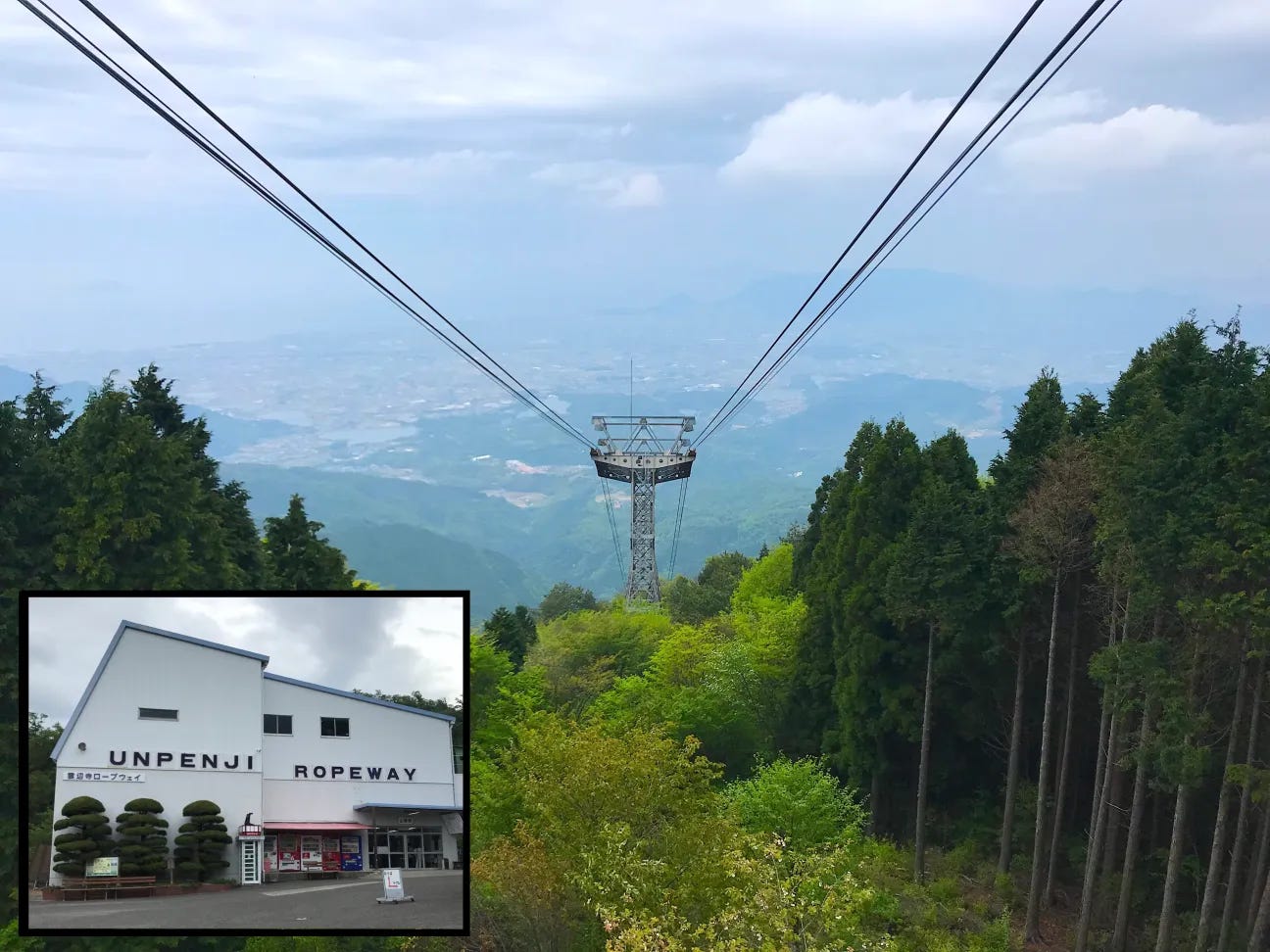
I took a few “short cuts” along my pilgrimage, where I didn’t walk or cycle to a temple: 1) I took the aerial tramway down from temple 21 followed by a bus & car to temple 22. 2) I took the aerial tramway up and down temple 66. 3) I visited temple 88 with a local friend in a car. 4) I took the aerial tramway up and down from table 84. 5) After visiting all 88 temples, I took a bus back to temple 1 to close the circle.
In each case, I thought about my options and debated whether I wanted to take the short cut or not. In each case, I decided to listen to my gut instead of my ego (which wanted a “pure” pilgrimage) and do what made sense at the time.
In the end, I was happy with the decisions I made with one exception. I visited temple 86-88 before visiting temples 84-85 due to logistics, routing, accommodation, returning the rental bicycle, etc. Temple 85 was my final temple and I didn’t get a strong sense of closure finishing there instead of at temple 88. If I was to do it again, I would finish at temple 88, immediately followed by returning to temple 1 to close the circle.
Setbacks
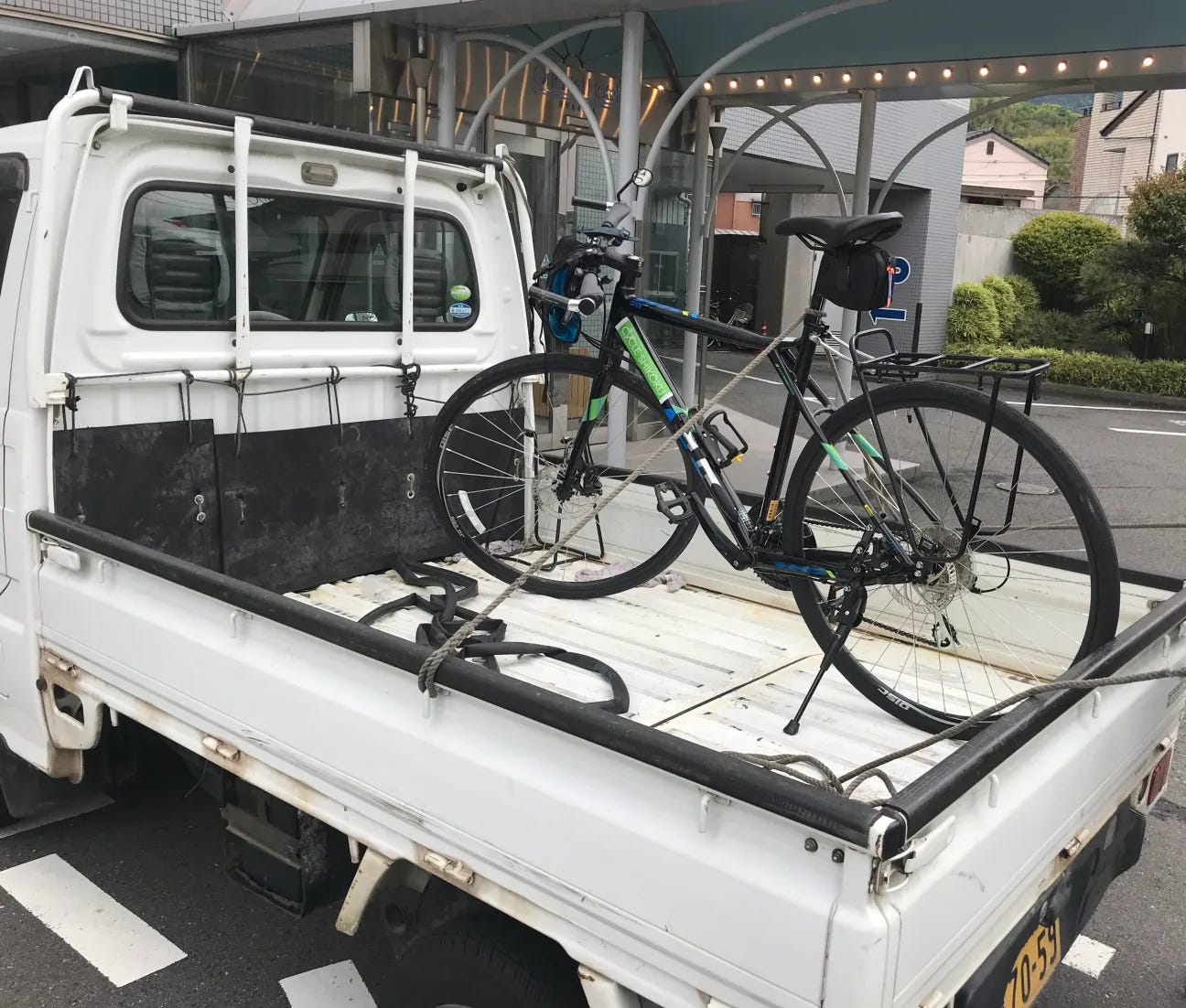
I had several setbacks along the journey, often due to bike issues. Each time, I had an opportunity to decide how to handle it. I could get frustrated, angry, or sad, which would not be unexpected given the circumstances. Or I could step back, take a moment, and then figure out how to deal with the setback, which is what I tried to do each time. This approach helped me learn to accept the situation at hand, versus getting upset at something out of my control. It taught me to surrender and let the universe take care of things as they need to happen.
It turned out that every setback led to a memorable experience that would not have happened otherwise. If it wasn’t for a flat tire without the necessary tools to fix, I would not have met the wonderful host at a guesthouse I ended up at who walked the Camino de Santiago years earlier. If it wasn’t for getting lost when I was rushing one day, I would not have met a henro from Texas that went to the same high school as me at the same time. If it wasn’t for the day of torrential rain and having to take a rest day, I would not have met a Japanese man at a bathhouse who previously lived in Spain and we had a beautiful conversation in Spanish about humanity.
Some of the best moments of the Henro came about due to setbacks and allowing for serendipity, versus trying to control the experience. If I didn’t have these setbacks, the experience would not have been nearly as impactful.
Suggestions & Resources
There are a lot of online resources to help non-Japanese henros plan for the Shikoku Henro pilgrimage, so I’m not going to try and write yet another complete planning guide. Instead, I want to share a few suggestions from my personal experience and have also included links to various resources and blogs that were helpful for me.
When to go
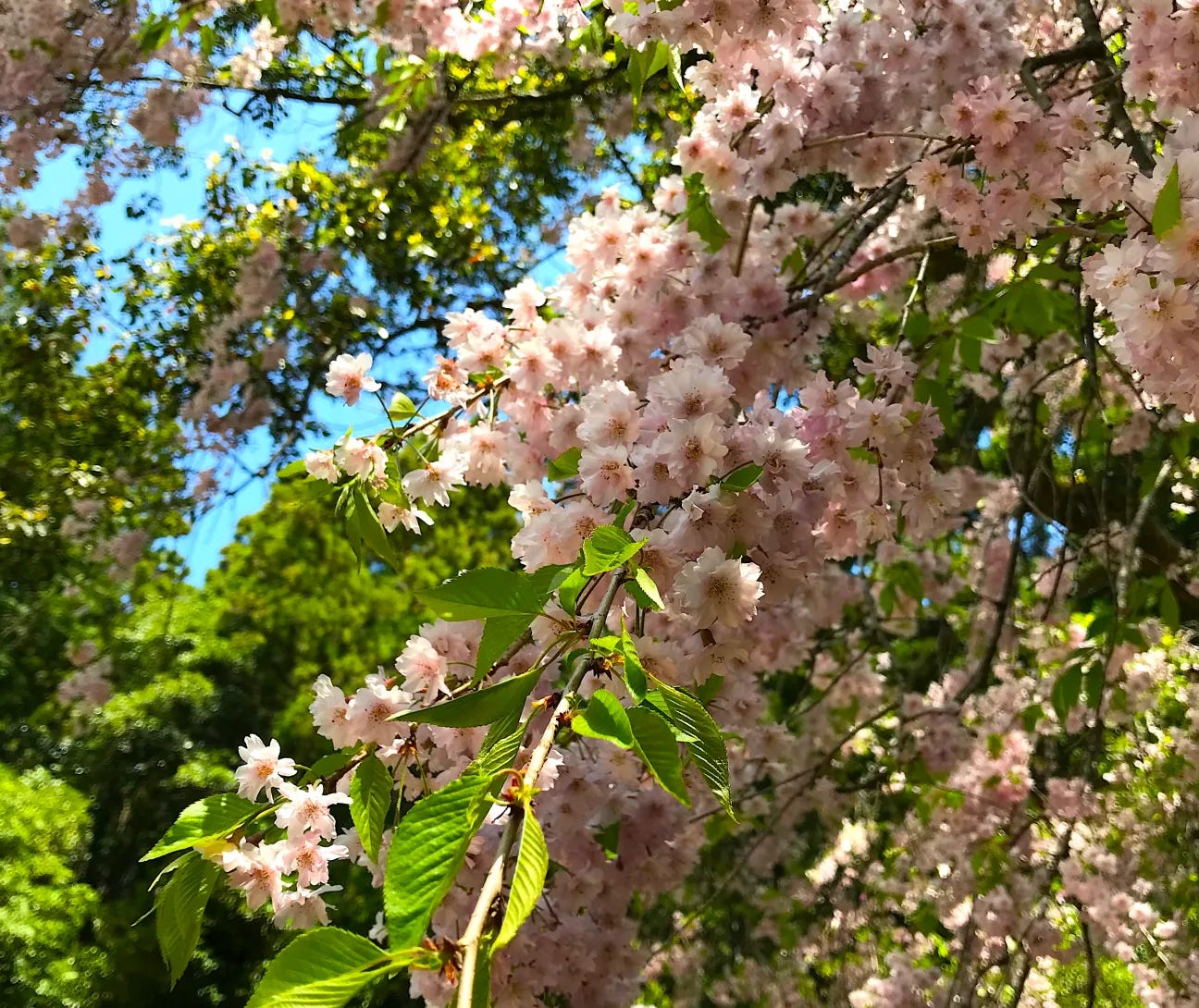
Spring and fall are the best and most popular seasons due to favorable weather and scenery (spring cherry blossoms and fall foliage). Summer can be very hot and humid and winter quite cold. I went in April and found it to be perfect timing (though I missed most of the cherry blossoms as they arrived early this year). I had only one day of torrential rain, which turned into a well timed rest day. Otherwise, I had pleasant weather almost every day.
Language
Knowing some Japanese would be very helpful, particularly for finding accommodation, ordering at restaurants, and connecting with the local community. Even knowing a little goes a long way as Japanese really appreciate when foreigners attempt to communicate in Japanese. The Lonely Planet Japanese phrasebook was helpful for me. Also, consider spending a few hours to learn the Katakana and Hiragana Japanese alphabets. Katakana is used for all foreign words and is used quite extensively, specially on menus, signs, etc. I kept a photo of both alphabets on my phone and referred to it often. Kanji (Chinese symbols) is a whole different story and would require years to master.
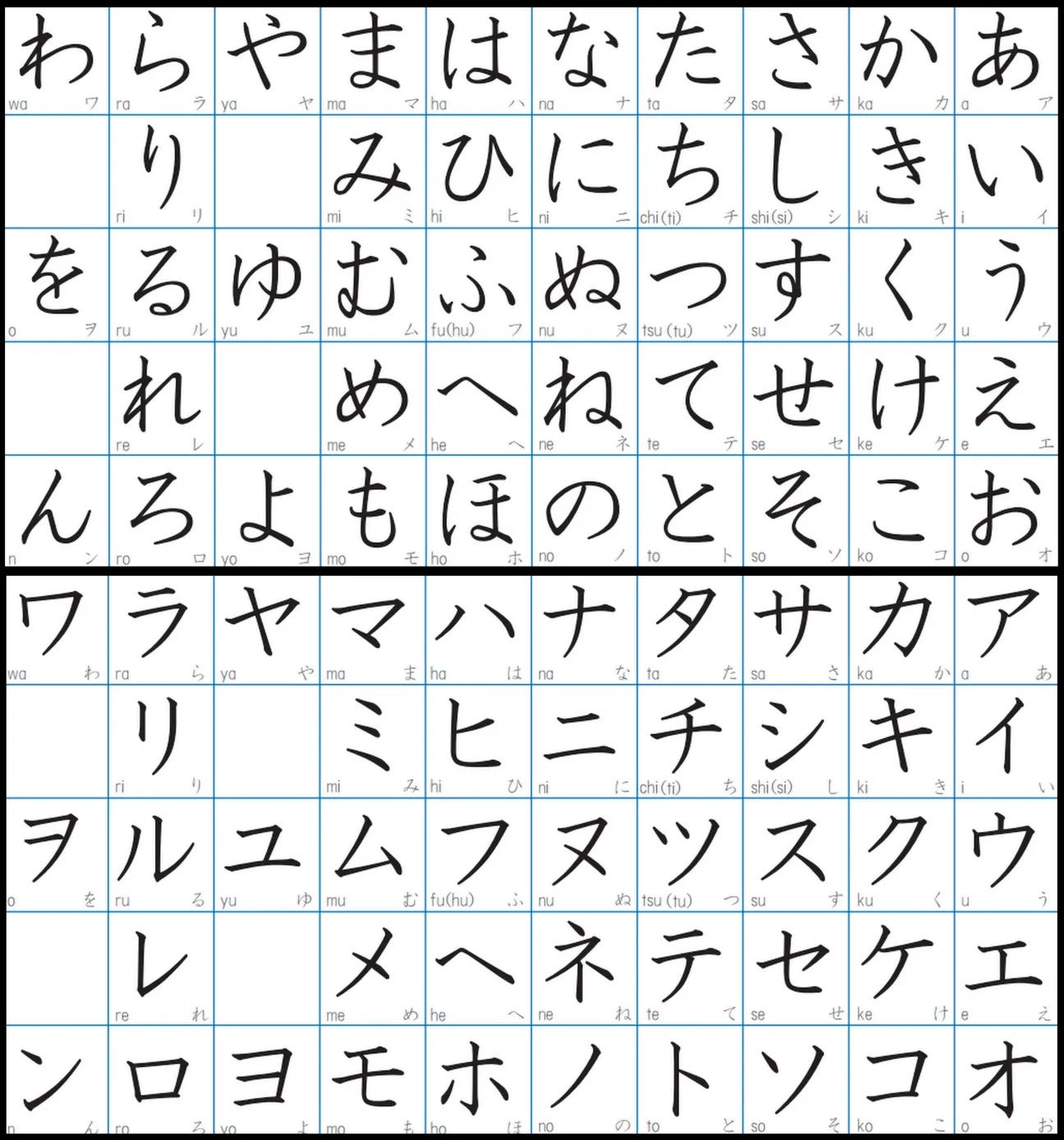
Guidebook
Pickup a copy of the English Guidebook Shikoku Japan 88 Route Guide. It’s essentially a detailed map book rather than a guidebook but is densely packed with useful information. It can be purchased at temple 1 (and a few other temples). No need to order it from Amazon Japan ahead of time, as I don’t think it would help much in preplanning and is more expensive.
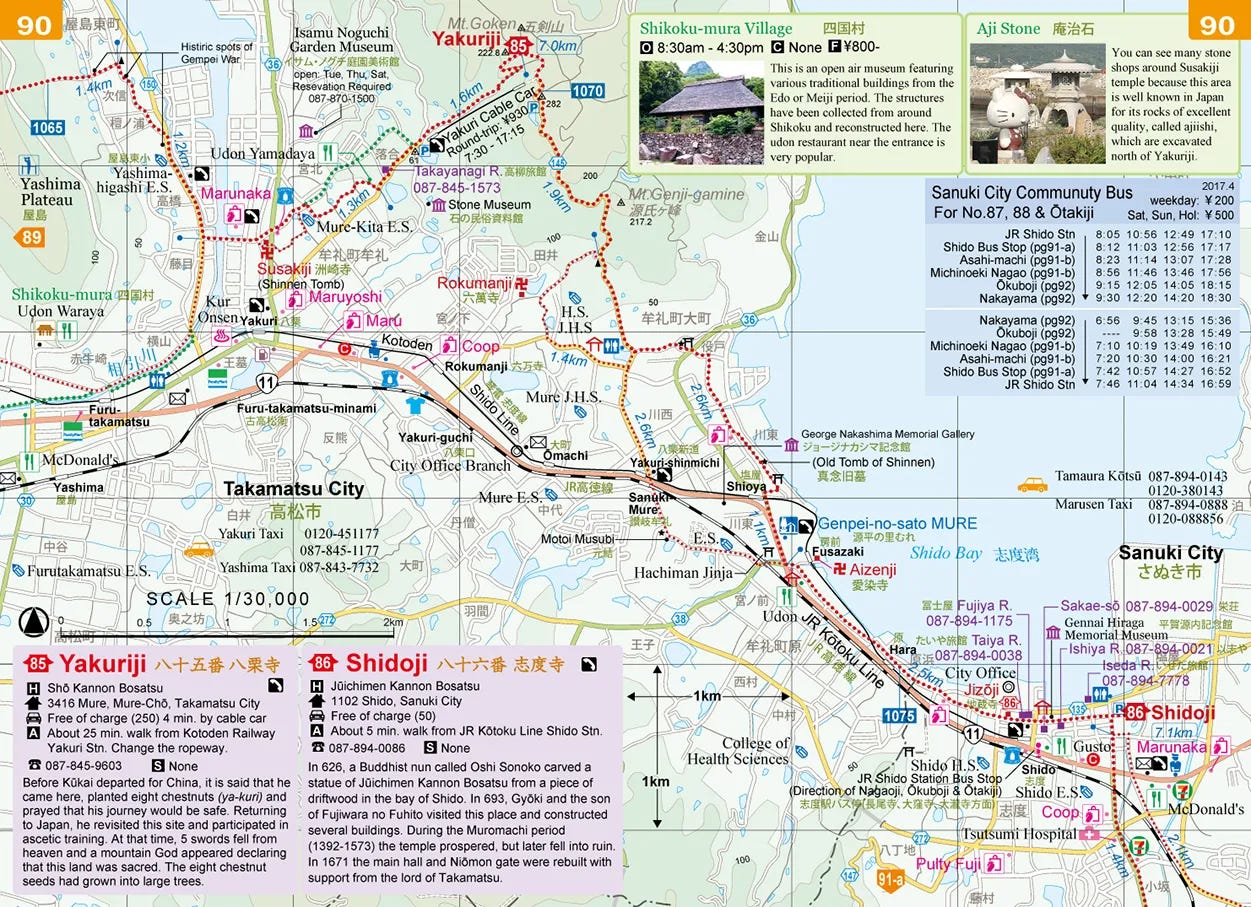
Navigation
The route is fairly well marked for walkers. When cycling, it was harder to see the markings as they are small and usually easier to view when walking on sidewalks. I used maps.me offline app and Google maps to navigate when cycling, trying to stay along the official walking route whenever feasible.
I was very glad I had a smartphone with internet access. I used it extensively for navigation, looking up resources (below), to make occasional phone calls to make accommodation bookings, and language translation. Though there are wifi options along the trail, I found them unreliable or often difficult to connect (particularly at konbinis). You can purchase a SIM card from booths and vending machines at Kansai airport, though I ended up using my US T-Mobile SIM. T-Mobile provides free 2G data access worldwide, but I found it too slow for anything beyond messaging and Google maps. T-Mobile also sells international 1GB/10-day high speed data passes for $20. I ended up signing up for the high speed pass 3 times (30 days, $60) which cost about the same as buying a Japanese SIM card.
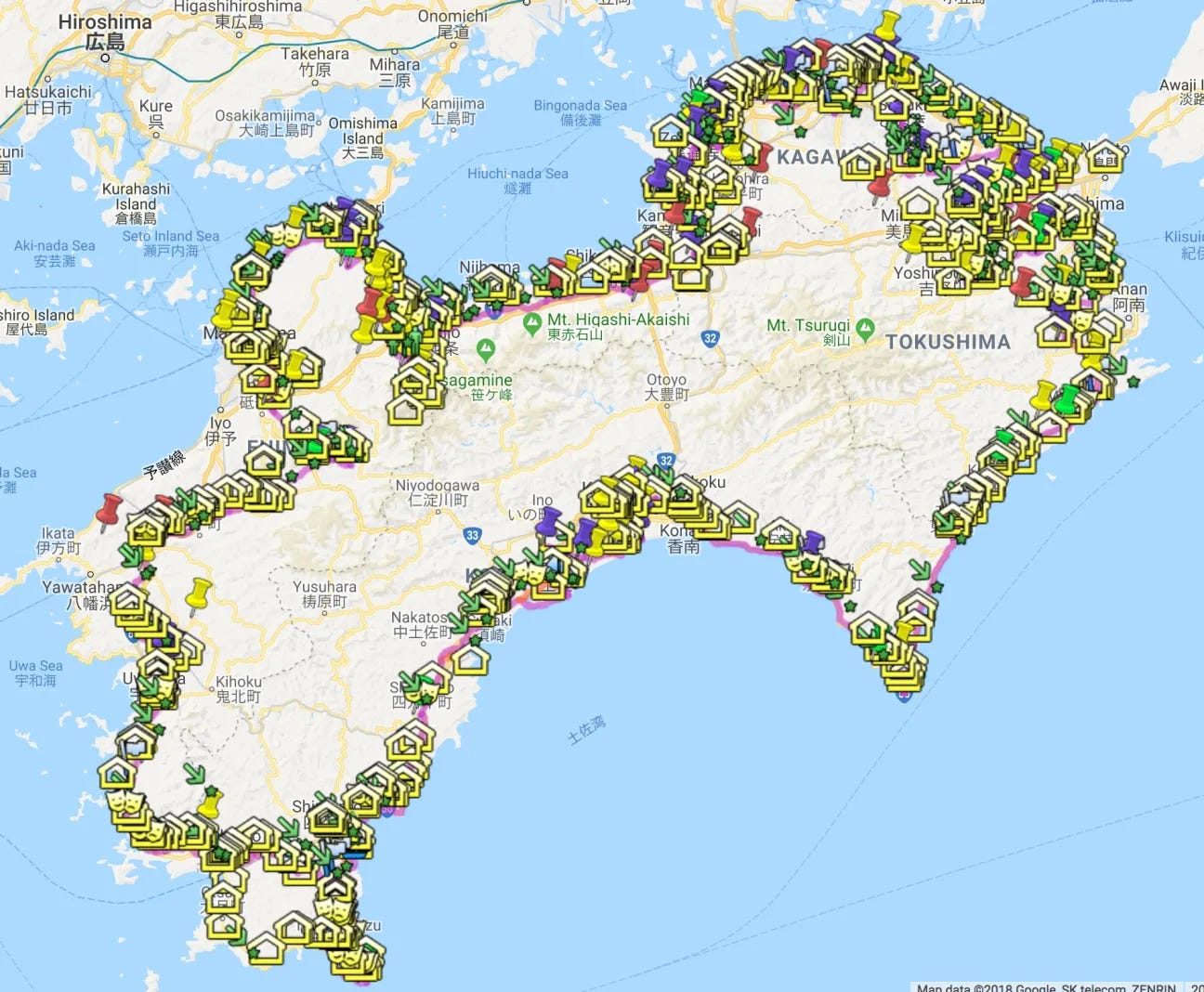
There are various GPS route maps available on the Ohenro-San Facebook group and via Google searches that have the entire trail, some variants, temples, accommodations, etc. You can load them into maps.me app and Google maps, so you always know where you are and how far to your next milestone.
Here are links to two route maps that look pretty comprehensive (I found these after I finished so I did not use them while on trail): Map 1 | Map 2
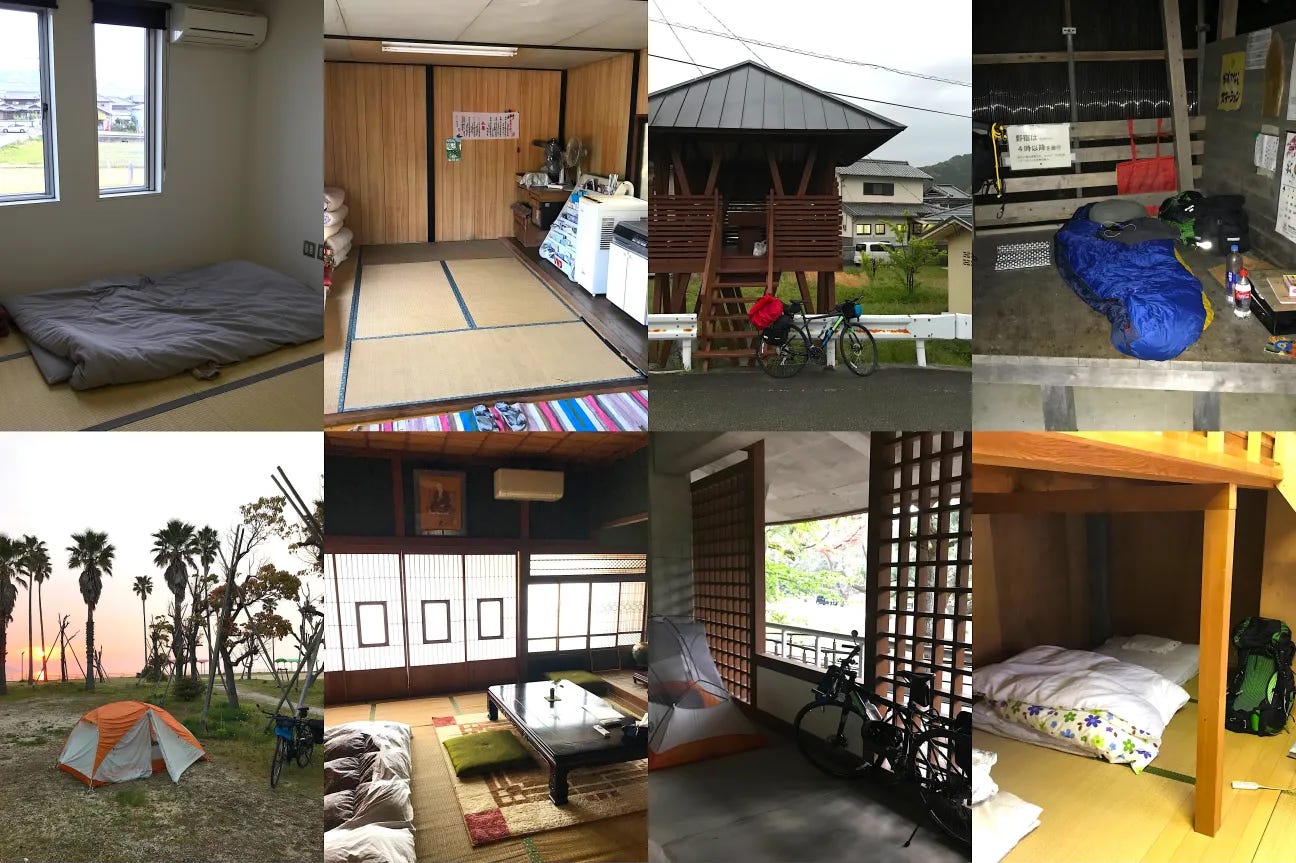
Accommodation
There are many types of accommodation possible on the Henro, both free (zenkonyado, tsuyado, henro huts, camping, etc) and paid (minshuku, guest houses, hotels, etc). I tried several different types of accommodation as summarized in the daily recap post.
Note that Golden week is a national holiday in April and it is advisable to book ahead of time during that week (unless you’re camping or staying in huts). Fortunately, I reached Takamatsu during Golden Week and was able to stay with my friends/hosts for a couple of days.
Below are some useful resources for finding various types of accommodation:
Henro House: a fantastic booking tool with English website and phone staff
Walking My Life: Free & Budget Lodging (and list of henro huts)
Following the Arrows: Free & Budget Lodging
Food
Konbinis (convenient stores) will become your most visited places (besides the temples). They are very different from those in the US. They have a wide variety of fresh food options, decent coffee, sometimes seating, (unreliable) wifi, and a wide array of products that should be sufficient for most henro needs. I usually visited 2-3 times per day. The most common chains (in order of my preference) were 7-11, Lawson, and Family Mart.
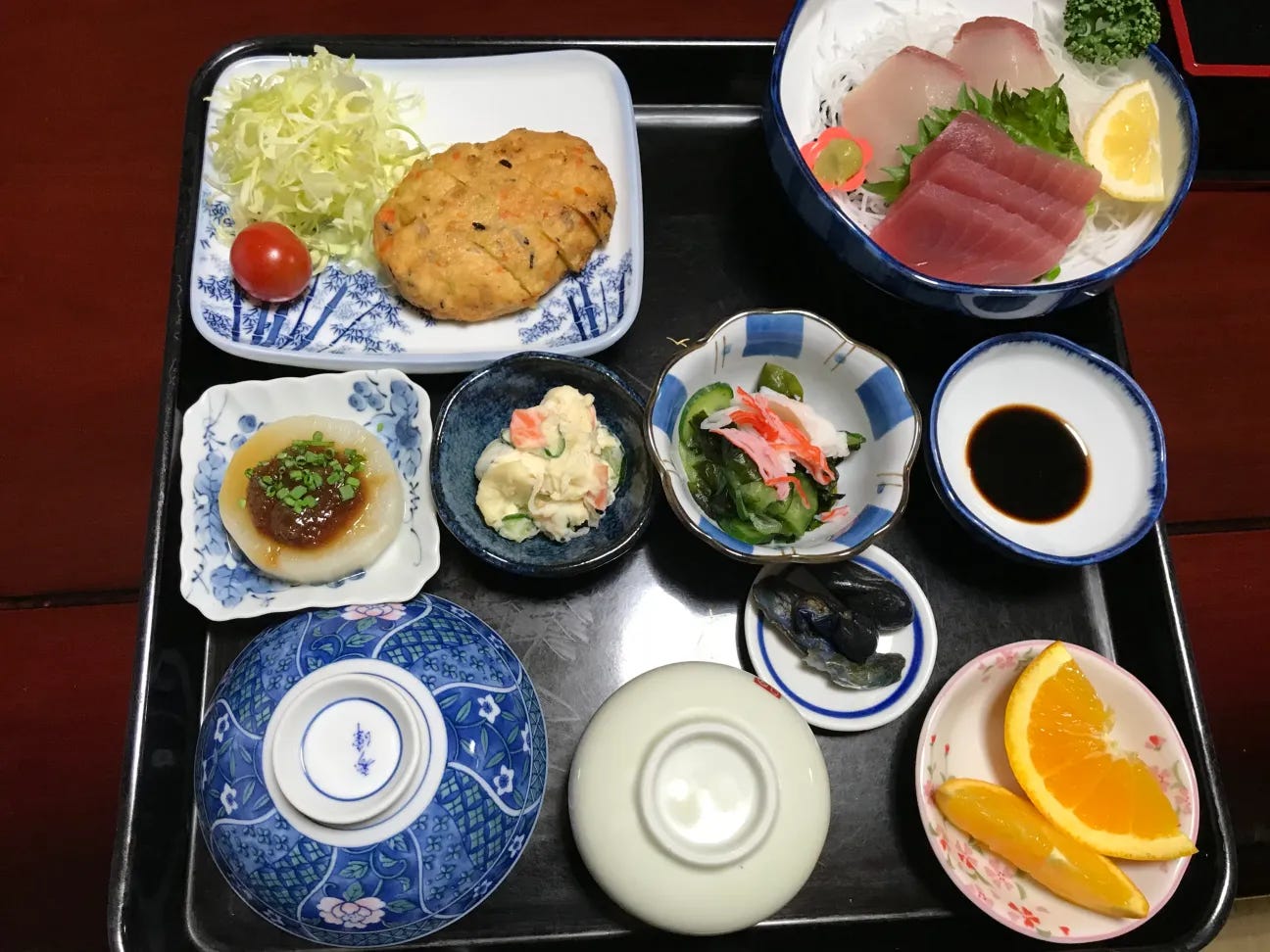
The food at minshuku/guest house accommodations was traditional Japanese style and always very good. Looking back, I wish I had booked more places earlier in the day (or the day before) so I could order dinner and breakfast as well (usually need to book before ~1pm). The meals I ate at guesthouses were the most memorable of the entire journey. You can also book ‘sudomari’ (without meals) if you just want a bed for significantly less cost.
There are also local specialties in various parts of Shikoku. I wish I had researched more about these and taken advantage of unique dishes that are only available in particular regions.
Planning
I pretty much winged the entire journey one day (or one hour) at a time. If I made a reservation for a place to stay, it was usually the same day, often late in the afternoon. This allowed me flexibility on how far I could go each day, based on how I was feeling and temple stamp office hours (close at 5pm). My forward progress would sometimes stop if I missed the 5pm cutoff to get a temple stamp, and then I would stay somewhere nearby and visit the temple the next morning. If you want more certainty of accommodation, you can book a few days at a time, and leave yourself some flexibility as things will happen that may impede progress (weather, physical condition, etc).
Gear
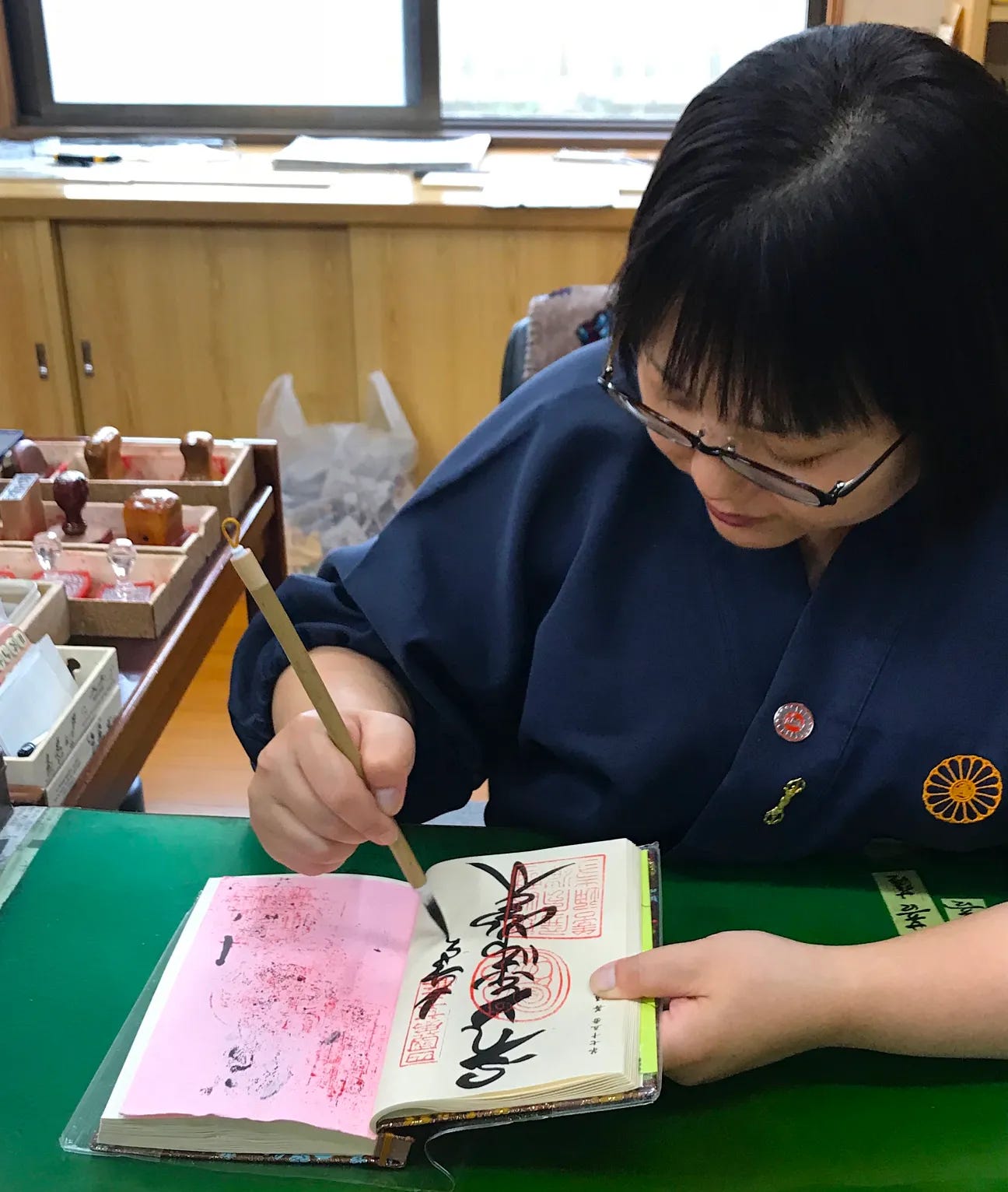
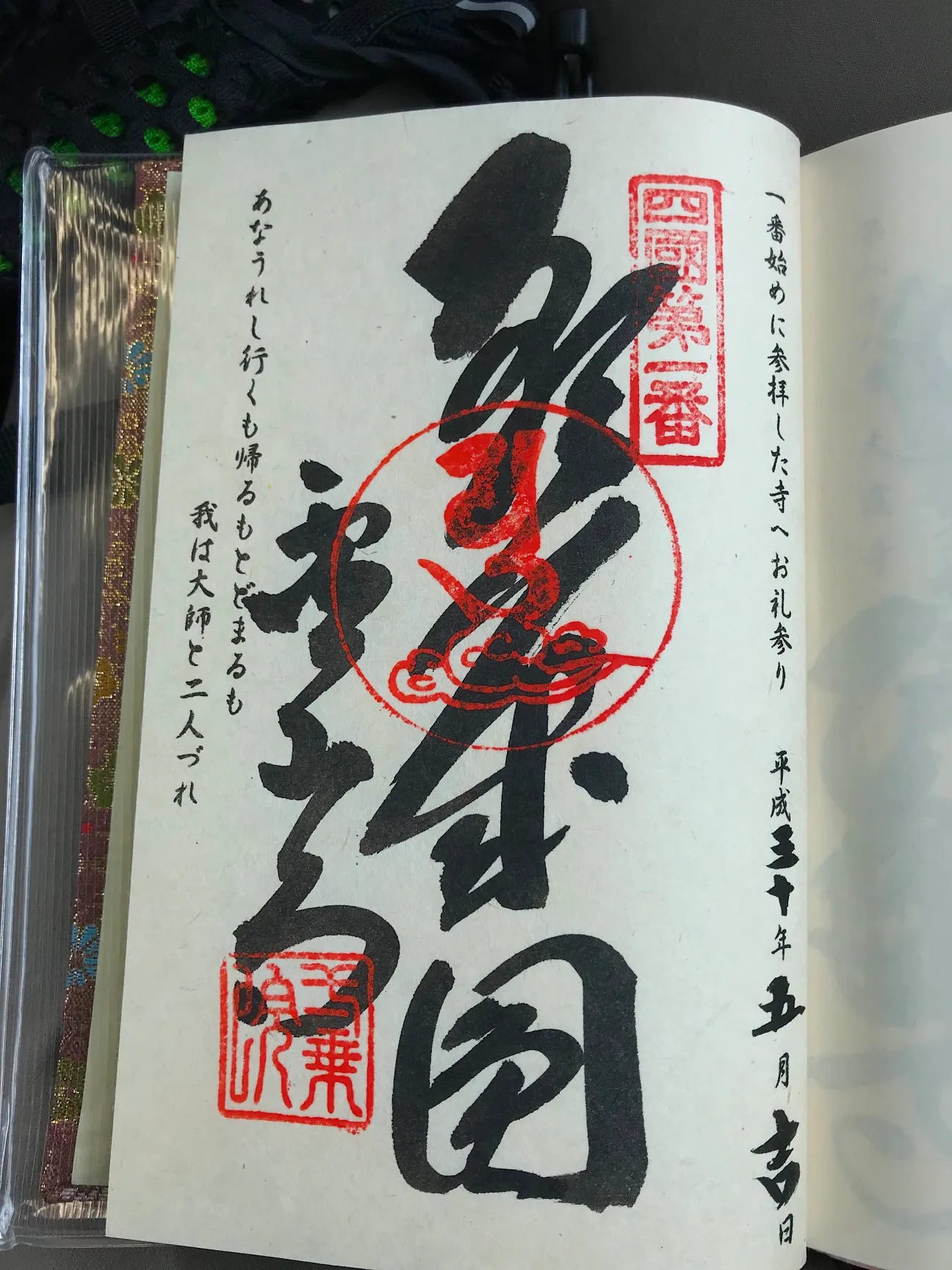
The pilgrimage specific gear (white vest, walking stick, stamp book, name slips, guidebook) can be purchased at temple 1 and a few other temples. For the rest, I essentially carried the same gear that I used when walking the Camino last year. The main difference was that I also carried a tent, sleeping bag, and sleeping pad, which allowed flexibility in where I slept. I did not bring cooking gear as prepared food and hot water is readily available at the numerous konbinis where I did most of my food shopping. Keep the gear as light as possible as there are ample opportunities to do laundry (when staying indoors) and to purchase common items at konbinis.
Henro Cycling Blogs
If you are interested in cycling the Henro, here are a few blogs I found that helped me understand the experience of cycling vs. walking. There are also numerous blogs from walking henros that can be found by searching Google or the Facebook group.